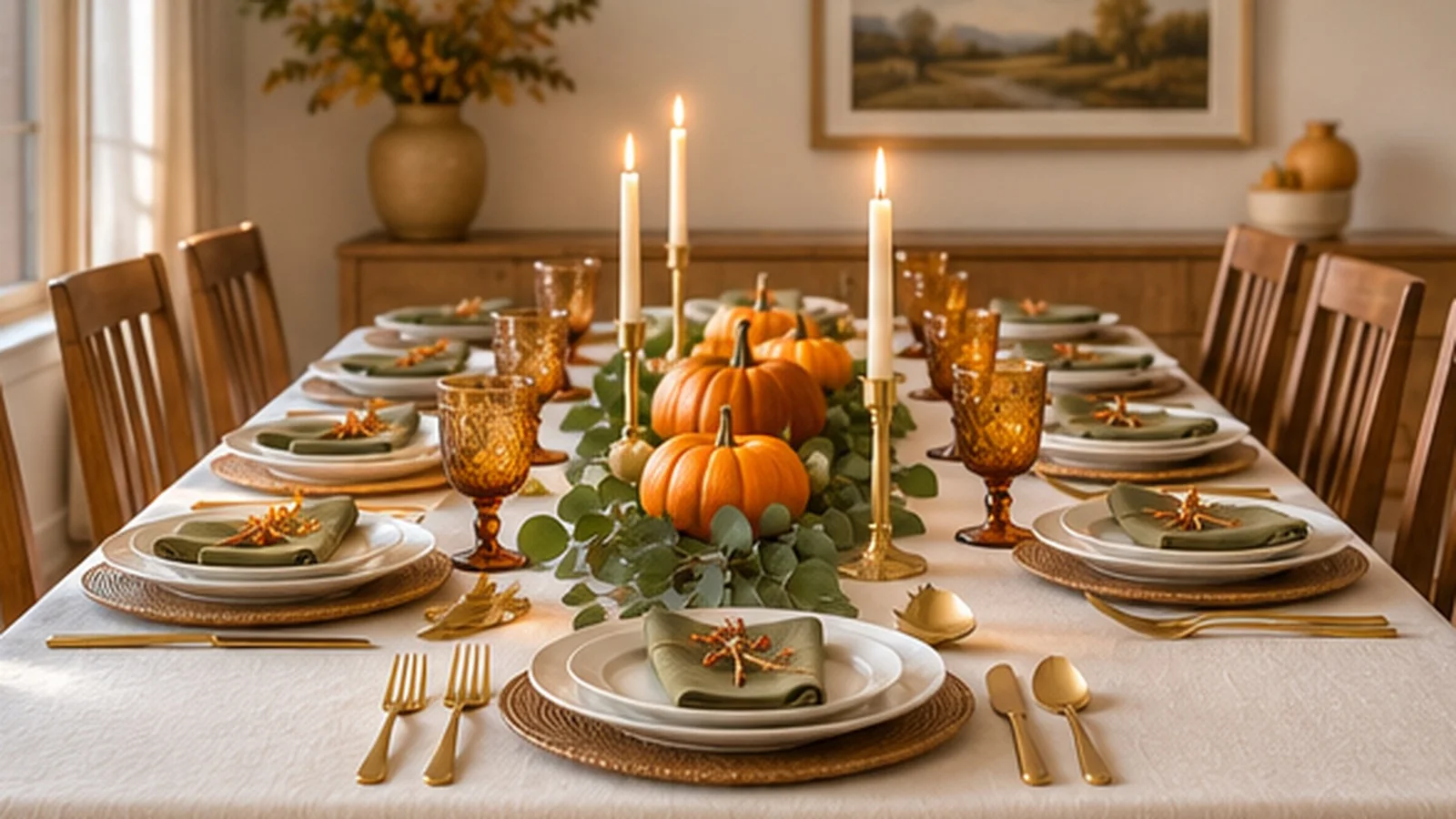
The best Thanksgiving table setting ideas start with a low centrepiece, comfortable place settings and room for the food. Choose three colours, repeat them across your linens and decorations, and build the table from the plates outward. These 15 looks adapt to an intimate dinner for four or a larger gathering for twelve.
Reviewed by Live Decor Well · Last reviewed . Editorial review on November 21, 2026. Styling budgets are illustrative; candle and tablecloth guidance links to its sources. No hands-on product testing is claimed.
Inside this story
Manufacturer and retailer links help verify specifications and prices. This guide is based on research, not hands-on product testing.
What is a Thanksgiving table setting?
A Thanksgiving table setting is the complete arrangement guests sit down to: cloth or runner, plates, napkins, cutlery, glasses and a centrepiece. It works when people can see each other, reach their water and pass dishes without rearranging the decorations. A tablescape is another name for the same overall design.
Start with the number of people and the meal format. Family-style serving needs room for platters in the middle; buffet service frees that space but needs a clear route to the food. Lay out your largest plates and serving dishes before buying anything decorative.
As a starting allowance, plan around 24 inches (61 cm) of table edge per guest and about 36 inches (91 cm) from the table edge to a wall for chair movement. These are planning estimates, not a guarantee of fit: wide chairs, table legs and a route behind seated guests can require more space. Sit in each chair during your trial layout.
The low centrepiece rule: test the sightlines
A centrepiece below roughly 12 inches (30 cm) is a useful starting point, but the real test is whether seated guests can see each other. A dense arrangement can obstruct conversation even below that height. Sit down on both sides before settling on its size.
Try a shallow bowl, a short line of pumpkins or small groups of greenery. On a narrow table, one removable arrangement is easier to live with than a full-length display. Keep large branches and tall flowers on a sideboard, and leave gaps for serving spoons and water jugs.
Pick your palette first: three colours, one style
Choose a warm neutral such as cream or natural linen, an autumn colour such as rust, cranberry or forest green, and a small metallic accent. Repeat them across napkins, runner and centrepiece. Start with the dishes you already own rather than buying plates to match a photograph.
Classic harvest uses orange, brown and gold; white pumpkin modern uses cream, white and green. Grounded greens pair olive and forest tones with brass, while rustic farmhouse relies on wood, linen and muted plaid. None requires every accessory to match. A consistent colour repeated in three places is often enough.
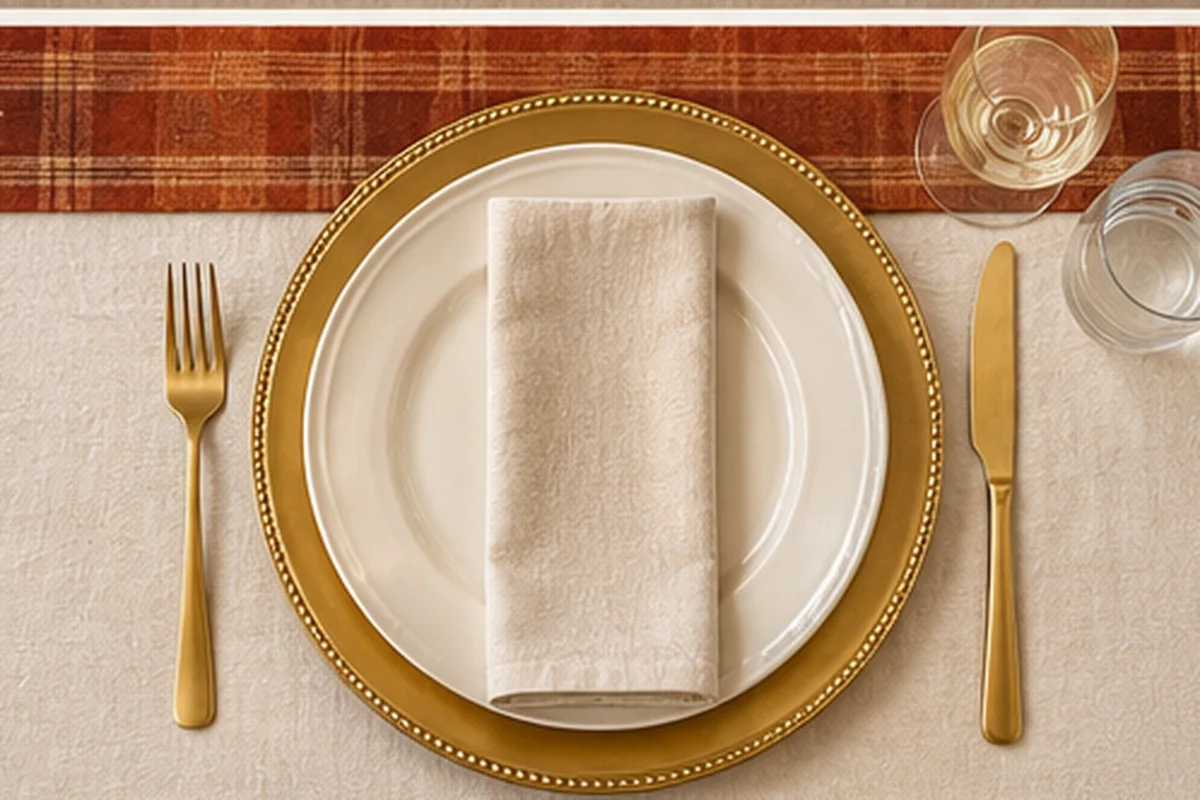
The six layers, in order
Start with the cloth or runner. Crate & Barrel’s tablecloth guide suggests a 6–8 inch (15–20 cm) drop for casual meals and about 15 inches (38 cm) for formal settings. Add twice your chosen drop to both the table length and width; for a round cloth, add it twice to the diameter.
Next add a placemat or charger if there is room. A charger is the decorative base beneath the dinner plate, not an extra eating surface. It is optional, and you can remove it before dessert or whenever the table needs more space.
Then set the plates for the courses you will actually serve. A dinner plate and folded napkin can be enough; add a salad plate only when useful. Put forks to the left, knives to the right with blades toward the plate, and only include utensils the meal needs.
Fourth, add napkins and simple ties. Fifth, position water glasses above and to the right of the plates, with any additional drink glasses within comfortable reach. Sixth, add the centrepiece last so its footprint fits the space you have left. Try lifting a serving bowl through the gaps before calling the table finished.
15 Thanksgiving table setting ideas
Choose a look that suits your existing dishes, table size and mood. The allowances below are illustrative US-dollar styling budgets, usually for eight guests, assuming you reuse plates, glasses and some linens. They are not checked retailer baskets or the cost of buying every pictured item new. Some ideas cover only a centrepiece or finishing detail.
Currency comparisons use explicit planning assumptions of US$1 = £0.80 = A$1.50, not live exchange rates or equivalent local retail prices. Taxes, delivery and installation may differ.
1. Classic harvest
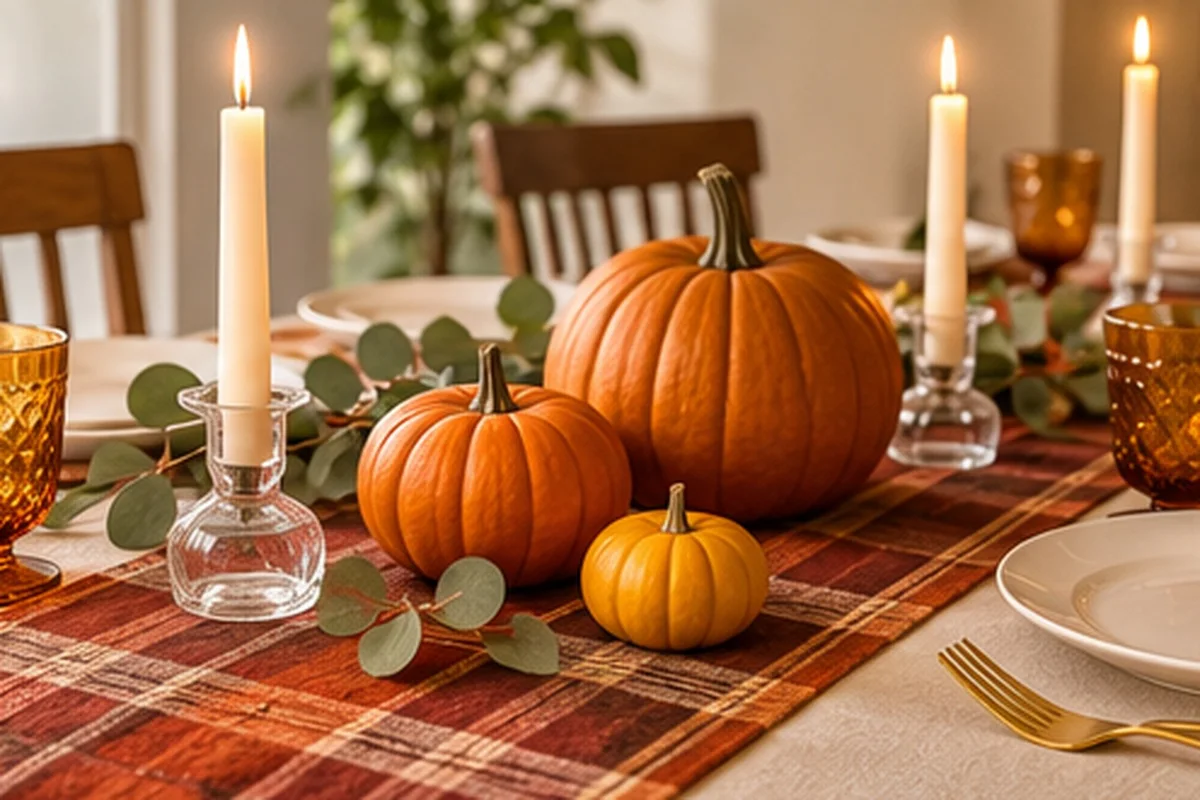
Start with cream linen and a rust plaid runner. Group orange pumpkins of different sizes along the centre, repeat amber in the glasses, and finish with ivory napkins. Leave breaks between the pumpkins for serving bowls. LED tapers give the warm evening glow without flames beside foliage.
Illustrative styling allowance: US$40–60. Reuse existing tableware; local prices and quantities will change the total.
2. White pumpkin modern
Combine white pumpkins, cream linen and white plates with a small amount of greenery. Gold-toned flatware is an optional finishing touch; use your everyday silver if that is what you own. Keep the arrangement loose so the pale pieces remain distinct instead of becoming one crowded mound.
Illustrative styling allowance: US$35–55. Reuse existing tableware; local prices and quantities will change the total.
3. Grounded greens
Use forest green napkins, an olive runner and a few eucalyptus stems, with brass-toned holders and amber glass. Choose one dominant green and let the others appear in smaller amounts. This palette works with warm wood and neutral dishes without requiring a new dinner service.
Illustrative styling allowance: US$50–80. Reuse existing tableware; local prices and quantities will change the total.
4. Rustic farmhouse
Leave the wood table visible beneath a narrow linen runner. Add plaid napkins, low jars of dried grasses and a shallow wooden bowl. Borrow containers before buying them. Keep dried materials away from food and use flameless lighting; move anything that sheds onto a sideboard.
Illustrative styling allowance: US$25–45. Reuse existing tableware; local prices and quantities will change the total.
5. Elegant jewel tones
Pair cranberry napkins with brass-coloured chargers and plum or forest green accents. Let the dishes stay simple so the deeper colours feel deliberate. One repeated metallic finish is enough for an evening dinner; a second patterned runner or heavily decorated glass can make the setting feel busy.
Illustrative styling allowance: US$60–90. Reuse existing tableware; local prices and quantities will change the total.
6. Dried botanical runner
Lay a sparse line of dried wheat, eucalyptus and dried orange slices down the centre, with small white pumpkins at intervals. Keep it flat and contained on the runner rather than spreading it into place settings. Use LED candles only beside these combustible materials.
Illustrative styling allowance: US$14–22. Reuse existing tableware; local prices and quantities will change the total.
7. The modern cornucopia
Fill a shallow basket or wooden bowl with small pumpkins, pears and pomegranates. Keep the fruit below seated eye level and use a stable container so round pieces cannot roll toward glasses. A single bowl is easier to lift away for the main course than many separate ornaments.
Illustrative styling allowance: US$22–36. Reuse existing tableware; local prices and quantities will change the total.
8. River rock place cards
Write guest names on smooth stones with a paint marker and let the ink dry fully before setting them beside the plates. Keep painted surfaces away from food. For families with toddlers, use folded paper cards instead of small loose stones. Matching handwriting is more useful than buying elaborate holders.
Illustrative styling allowance: US$7–10. Reuse existing tableware; local prices and quantities will change the total.
9. Taper candle ladder
Arrange six or seven LED tapers in stable holders at different heights along a long table. Keep the pattern loose and leave sightlines between holders. On a smaller table, use three. If using real candles, follow the clearance guidance below; a tight greenery-filled arrangement is a reason to choose flameless.
Illustrative styling allowance: US$13–23. Reuse existing tableware; local prices and quantities will change the total.
10. Fresh herb napkin ties
Fold plain napkins and tie them with twine or ribbon, adding a small rosemary, thyme or sage sprig. Prepare one sample before cutting all the ties. Keep strongly scented herbs optional for sensitive guests, and treat handled decorative sprigs as decoration rather than inviting guests to eat them.
Illustrative styling allowance: US$5–8. Reuse existing tableware; local prices and quantities will change the total.
11. A coordinated kids’ table
Repeat the adult table’s colours using a kraft-paper covering, age-appropriate crayons and sturdy cups. Give each child enough room to draw without knocking a glass. Skip candles and small loose decorations; a simple drawn pumpkin motif can carry the theme without filling the centre.
Illustrative styling allowance: US$15–25 for six children. Reuse existing tableware; local prices and quantities will change the total.
12. A small table for four
For a 48-inch (122 cm) round table, try four simple settings and one small, low bowl. Check the actual plate and chair sizes before adding chargers. Serve from the kitchen or a nearby surface if bowls crowd the centre. A round arrangement usually leaves more usable space here than a long runner of objects.
Illustrative styling allowance: US$20–35 for four. Reuse existing tableware; local prices and quantities will change the total.
13. A buffet table for twelve
Move serving dishes to a separate sideboard and let the dining table hold place settings, water and a restrained centrepiece. Keep decorations low even when food is elsewhere: twelve guests still need to see one another. Check the route between the buffet and chairs before setting out glassware.
Illustrative styling allowance: US$60–100 for twelve. Reuse existing tableware; local prices and quantities will change the total.
14. A Friendsgiving mix
Use the plates and glasses friends already have, then connect them with one napkin colour, a plain runner and handwritten place cards. Repeat colours rather than trying to match every shape. Assign serving dishes in advance so guests do not arrive with more bowls than the table can hold.
Illustrative styling allowance: US$25–40. Reuse existing tableware; local prices and quantities will change the total.
15. The $33 starting-budget table
Use kraft paper, a few grocery-store pumpkins, reused napkins and a small herb detail. Add flameless lights only if they fit the remaining allowance, and omit them if they do not. The aim is a coherent low-cost table, not a promise that a complete new set of dishes and decorations costs $33.
Illustrative styling allowance: US$33–52. Reuse existing tableware; local prices and quantities will change the total.
Candles: atmosphere with enough clearance
The U.S. Fire Administration’s candle guidance says to keep candles at least 12 inches (30 cm) from anything that can burn, use stable holders and extinguish them when leaving the room. Keep them away from children and pets. A glass holder does not make nearby dried foliage safe.
Use flameless candles for tight tables, paper runners, dried botanical arrangements and children’s settings. The photographs illustrate styling, not measured flame clearances. Do not copy a close candle-and-greenery arrangement with real flames; leave the lighting out if safe spacing cannot be maintained.
What a Thanksgiving table costs: three planning budgets
Set an allowance before shopping and count what you already own. A low-cost table can use the same palette and careful spacing as a more expensive one. Spend first on missing essentials; buy decorative extras only after every guest has a usable place setting.
Currency comparisons use explicit planning assumptions of US$1 = £0.80 = A$1.50, not live exchange rates or equivalent local retail prices. Taxes, delivery and installation may differ.
| Plan | Allowance | Where to spend it |
|---|---|---|
| Simple | US$33 (£26.4 / A$49.5) to US$52 (£41.6 / A$78) | Paper runner, a few pumpkins, reused napkins and simple place cards |
| Layered | US$60 (£48 / A$90) to US$100 (£80 / A$150) | Reusable runner and napkins, a low bowl and selected finishing details |
| More reusable pieces | US$150 (£120 / A$225) to US$200 (£160 / A$300) | Better linens or chargers you will also use for other dinners |
When to set the table
For U.S. Thanksgiving on Thursday, November 26, 2026, set out clean, dry tableware on Wednesday evening if the table can stay undisturbed. Add fresh flowers, herbs and any items that need refrigeration closer to the meal. Cover or store tableware instead if pets, children or dust make an overnight setup impractical.
A dry run a few days earlier is even more useful: sit in every seat, check sightlines and place the empty serving dishes where they will go. Make sure chairs move comfortably and that nobody needs to stand up to reach the salt. Take a quick photograph so setting it again is easy.
For ideas beyond the table, see our Thanksgiving decor ideas. If you are also planning the meal, our air fryer vs oven comparison explains capacity and running-cost tradeoffs.
Frequently Asked Questions
You Might Also Love
20 Thanksgiving Decor Ideas for a Welcoming Home
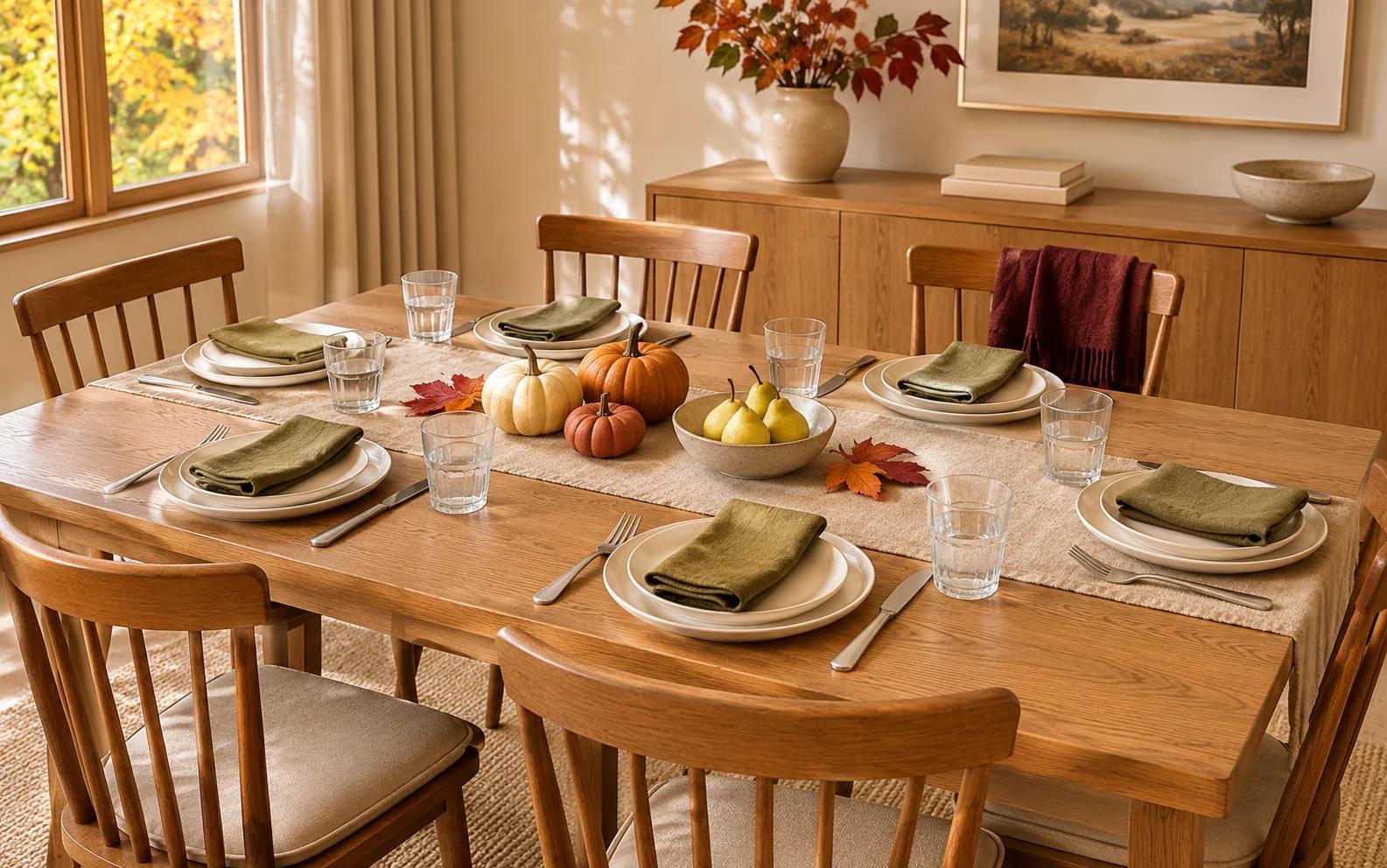
The most useful Thanksgiving decor ideas start with a welcoming table, a clear route through the room and a small repeated palette. Reuse plain dishes, add textured napkins and choose a low, movable centerpiece. Concentrate decoration where guests gather rather than filling every surface, and leave space for the food.
Black Friday Home Decor Deals (2026): Where to Shop and What to Buy
Black Friday is November 27, 2026, and Cyber Monday is November 30. Home decor events start earlier, but a sale badge alone does not make a good purchase. Prioritise the furniture, rugs, lighting or bedding you already need, measure first, and compare the delivered price of the exact item before buying.
Air Fryer vs Oven: Which Fits Your Kitchen?
An air fryer usually makes more sense for small, crisp meals; an oven is more versatile for large dishes, baking and several trays. In the air fryer vs oven decision, compare the complete meal, not wattage alone. A smaller appliance can save energy, but repeated batches can remove that advantage.