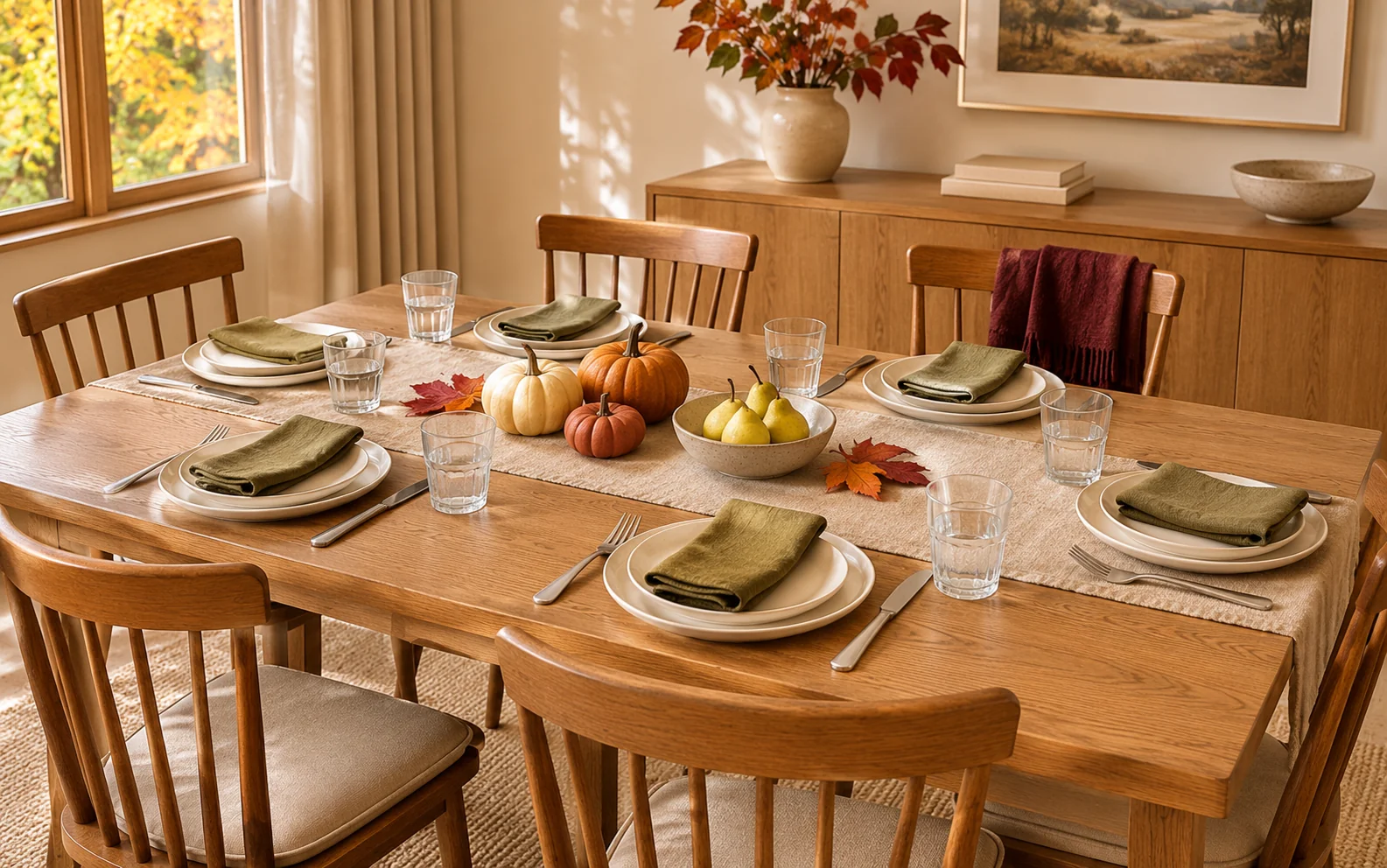
The most useful Thanksgiving decor ideas start with a welcoming table, a clear route through the room and a small repeated palette. Reuse plain dishes, add textured napkins and choose a low, movable centerpiece. Concentrate decoration where guests gather rather than filling every surface, and leave space for the food.
Reviewed by Live Decor Well · Last reviewed . Source and calculation review; no hands-on product testing or professional certification is claimed.
Inside this story
Manufacturer and retailer links help verify specifications and prices. This guide is based on research, not hands-on product testing.
Which Thanksgiving decor ideas should you start with?
Start with the places guests will use: the front door, the dining table and the surface where food or drinks will be served. Choose two main colors and one natural texture, then repeat them lightly. This gives the home a connected look without requiring a coordinated collection of new seasonal objects.
For the US, Thanksgiving falls on Thursday, November 26, 2026, according to the Office of Personnel Management holiday calendar. Canada’s 2026 public-holiday calendar places Thanksgiving on October 12. This November plan is therefore aimed primarily at US hosting and gatherings elsewhere that follow the US date.
In the UK, Australia and New Zealand, use the same ideas for a friends’ dinner or a family celebration rather than assuming a national holiday. November is spring in Australia and New Zealand, so lighter fabric and fresh green accents may suit the weather better than heavy autumn layers. The room should feel comfortable in its actual season.
How can you decorate for Thanksgiving on a small budget?
Spend first on one reusable item that solves a real hosting problem, such as enough napkins or a tray for moving drinks. Then borrow, rearrange or repurpose what you own. Set a total cap before buying small decorations; inexpensive pieces can quietly become an expensive collection when every surface gets its own theme.
The tiers below are suggested spending caps for individual ideas, not retailer quotes. As a real reference, Dunelm’s cotton napkin collection listed a set of four Esme washed-cotton napkins at £8 when checked, equivalent to US$10 (£8 / A$15) under our assumptions. Availability and colors can change.
Currency comparisons use explicit planning assumptions of US$1 = £0.80 = A$1.50, not live exchange rates or equivalent local retail prices. Taxes, delivery and installation may differ.
US readers can look for plain reusable table linen at stores such as Target or a local homewares shop; UK readers can compare Dunelm and John Lewis. Canadian, Australian and New Zealand readers should price a comparable local item rather than treat the converted amount as a regional offer. Check what you already own before shopping.
| Tier | USD / GBP / AUD comparison | Typical approach |
|---|---|---|
| Reuse | US$0 (£0 / A$0) | Rearrange, borrow or use existing supplies |
| Small addition | Up to US$10 (£8 / A$15) | Paper details or one reusable accent |
| Focused upgrade | Up to US$25 (£20 / A$37.5) | A useful textile, tray or lighting accent |
Which Thanksgiving table decor ideas leave room for dinner?
Treat the table as a working surface first. Set one place completely, add the serving dishes you expect to use, and only then find room for decoration. A narrow runner, small movable objects and repeated napkins usually give more flexibility than one oversized centerpiece that competes with plates and conversation.
1. Start with the plates you already own
Use your everyday plates as the visual anchor, even if the set is not perfectly matched. Repeat the napkin color or glass style to make the mix deliberate. Before adding chargers, check that the table still has room for hands, cutlery and shared dishes. A charger that fills the entire setting can make a small table feel crowded. Cost tier: Reuse.
2. Make a narrow runner from existing fabric
Fold a plain tablecloth or clean length of fabric into a narrow central strip. On a 36-inch-wide (91 cm) table, try a 10–12-inch (25–30 cm) runner as a starting point, then check your actual plates. Keep the ends away from busy chair routes, and use a fabric that will sit flat rather than curl around serving dishes. Cost tier: Reuse.
3. Repeat one napkin color
Choose a single tone such as olive, warm cream or muted rust and repeat it at each place. A simple rectangle fold is enough; the fabric supplies the texture. Count guests before buying a pack so you do not discover a mismatch on the day. If you need extra settings, alternate two existing colors consistently rather than hiding the odd napkin at one end. Cost tier: Focused upgrade.
4. Turn place cards into useful directions
Write names on folded card and, if helpful, add a small note such as the location of drinking water or the child-friendly seat. Keep the card separate from food and choose a size that stands without needing a heavy holder. A 3×2-inch (7.6×5.1 cm) folded face is a practical trial size, not a mandatory format. Cost tier: Small addition.
Which Thanksgiving centerpiece ideas work on a small table?
A small-table centerpiece should be easy to move and low enough for guests to see one another comfortably. Build a loose group rather than a solid wall of decoration. Test it from a seated position, and keep a separate destination ready so the arrangement can leave the table when serving dishes arrive.
5. Group three small bowls instead of one large display
Use three bowls you already own, with one repeated material or color connecting them. Leave space between the bowls so the arrangement reads as a group without becoming a barrier. One can hold wrapped place cards or a non-food decorative accent; keep anything intended to be eaten in a clean food-safe container. Move the bowls individually as dishes arrive. Cost tier: Reuse.
6. Build a low pumpkin cluster
Choose a few modest pumpkins or gourds instead of the largest ones in the display. Place them on a washable tray and check the bottoms before bringing them onto furniture. Mix shapes while keeping the colors restrained, then leave the surrounding space empty. If the group blocks a shared serving dish, move it to the sideboard rather than forcing both onto the table. Cost tier: Small addition.
7. Use a single branch arrangement on the sideboard
Put the taller decorative moment off the dining table, where it can be seen without interrupting conversation. Use a stable vessel and a modest arrangement that does not project into the walking route. Purchased stems or clean branches appropriate for indoor display work better than a hurried bundle that sheds over food. Keep the table itself quieter so the two surfaces do not compete. Cost tier: Reuse or small addition.
8. Create evening warmth with flameless lights
Place a few enclosed flameless lights among the low decorations and check their appearance in the room before guests arrive. Warm light can soften plain dishes without adding more objects. Follow the product instructions, secure battery compartments and keep loose batteries away from children. Avoid filling the entire runner with lights; leave obvious places to set down bowls and passing plates. Cost tier: Focused upgrade.
What Thanksgiving front porch and entryway decor is practical?
Let the entrance suggest the table palette without turning it into an obstacle course. One clear focal point is usually enough: a door accent, a tidy planter or a small welcome arrangement. Keep door swings, steps and handrails usable, and choose materials that suit the actual weather rather than assuming every porch stays dry.
9. Refresh one existing planter
Clear tired foliage and tidy the container you already have before buying another seasonal object. Add a restrained accent that suits the plant and local conditions, keeping the pot stable and out of the door swing. In a shared apartment entrance, check building rules before placing anything outside your unit. A cared-for planter can make the entrance feel prepared without a large decorative installation. Cost tier: Reuse or small addition.
10. Make the door accent removable
Use a simple seasonal accent that can be attached with a method suitable for the door finish. Check the fixing instructions and test discreetly rather than assuming a removable hook is safe for every paint or veneer. Keep the arrangement narrow enough to avoid catching on the frame. Repeat a table color so the entrance feels connected to the meal inside. Cost tier: Small addition.
11. Give guests an obvious place for coats
Clear hooks or a designated rail before adding entryway decoration. A small handwritten sign can make the arrangement clear without a host explaining it to every arrival. Keep bags off the main route and leave seating available for anyone changing footwear. The welcome feels warmer when the room works easily; a crowded console rarely compensates for nowhere to put a coat. Cost tier: Reuse.
12. Style the console with one useful tray
Set a shallow tray on the entry console for a few essentials, then leave the rest of the surface reasonably clear. Add one small decorative object in the dining palette, not a second elaborate centerpiece. If guests may use the tray for keys, keep it away from the food-serving area. Our entryway decorating ideas offer more ways to arrange the surrounding furniture. Cost tier: Reuse.
How do you decorate a small home for Thanksgiving guests?
In a small home, decoration should clarify the hosting layout instead of taking away usable space. Separate coats, drinks and food where possible, and make the dining table easy to reset. A few repeated colors across different surfaces can create a festive room without adding furniture or narrowing the routes between seats.
13. Move drinks away from the kitchen doorway
Create a drinks spot on an existing sideboard or sturdy counter away from the busiest cooking route. Put glasses and water where guests can see them, then use one small accent to connect the spot to the table. Protect the surface from moisture. Check the route with two people standing there so the station does not become the new bottleneck. Cost tier: Reuse.
14. Use a tray as a movable centerpiece
Build the dining decoration on a tray that one person can lift comfortably. Before the meal, it gives the table a finished appearance; during dinner, it moves to a cleared side surface. This is especially useful when a small table must hold shared dishes. Test the complete tray’s weight and stability before placing it among glasses, rather than discovering it is awkward during service. Cost tier: Reuse.
15. Repeat textiles rather than buying more objects
A folded throw on a nearby chair and napkins in a related shade can connect the living and dining zones. Keep the throw away from cooking appliances and avoid covering a seat someone needs immediately. The aim is visual repetition, not layers everywhere. If you already have patterned cushions, choose a quieter table textile so the room has somewhere for the eye to rest. Cost tier: Reuse.
16. Reserve one clear landing surface
Choose a practical spot for dishes arriving from the kitchen and keep it free of decoration. A heat-appropriate protective mat can be more useful than another centerpiece. Tell anyone helping with service where the space is, and make sure the route does not cross a chair being pulled out. The deliberate empty area is part of a successful hosting plan, not unfinished styling. Cost tier: Reuse.
Which simple Thanksgiving details make the gathering feel personal?
Personal details work best when guests can enjoy them without following a complicated activity. A short note, familiar serving piece or easy place to contribute a memory can make the meal feel considered. Keep the details optional and unobtrusive, and give them a practical place so they do not compete with food or conversation.
17. Put a short note at each place
Write one warm sentence on the back of the place card or on a separate folded note. Keep it specific and brief rather than turning every setting into a speech. The gesture works with plain dishes and does not need elaborate stationery. If the gathering includes people you do not know well, a simple welcome is more comfortable than a forced personal message. Cost tier: Small addition.
18. Give a familiar serving piece a visible role
Use a bowl, platter or jug that has a story, provided it is suitable for its intended food use. Set it where the host can explain it naturally rather than building the whole table around fragile heirlooms. Pair it with everyday pieces so the setting remains relaxed. Check for damage before use and display unsuitable decorative ceramics separately instead of serving from them. Cost tier: Reuse.
19. Make gratitude cards optional
Place a small stack of cards and a pen on a side surface rather than assigning a task at every seat. Guests can write something if they wish, and the cards can be collected in a plain bowl after the meal. Keep the activity separate from the serving route. This gives people a way to contribute without making anyone perform gratitude on demand. Cost tier: Small addition.
20. Plan how the decorations will be reused
Choose a home for each purchase before buying it: napkins can return to everyday dinners, a tray can serve drinks, and a neutral runner can work throughout the year. Store reusable pieces together only after they are clean and dry. A small written inventory prevents buying the same supplies again next season and keeps the collection manageable in a home with limited storage. Cost tier: Reuse.
What table measurements should you check before decorating?
Measure your actual table and test a complete place setting before buying a runner or centerpiece. Plates, serving dishes and chair positions determine what remains available. The example below is a mock-up method, not a seating-capacity standard: guests’ comfort and access should decide the final arrangement, especially when space is limited.
On a 72×36-inch (183×91 cm) table, first arrange the chairs you intend to use and place the actual plates. Add the largest serving dish, then try the narrow runner and low decorations. If the setup feels crowded, serve from a sideboard or reduce the decoration before squeezing another object into the middle.
For a patterned tabletop, the furniture can be the decoration. Our mosaic dining table ideas show why a simpler setting can let an interesting surface remain visible. For the room around it, use our entryway decor ideas and open shelving kitchen ideas to give everyday items a clear place.
| Element | Trial measurement | What to test |
|---|---|---|
| Table | 72×36 in (183×91 cm) | Actual chair positions and room access |
| Runner | 10–12 in (25–30 cm) wide | Space beside plates and serving dishes |
| Place card face | 3×2 in (7.6×5.1 cm) | Legibility and stability |
| Centerpiece | Use the smallest group that works | Seated sightlines and easy removal |
Frequently Asked Questions
You Might Also Love
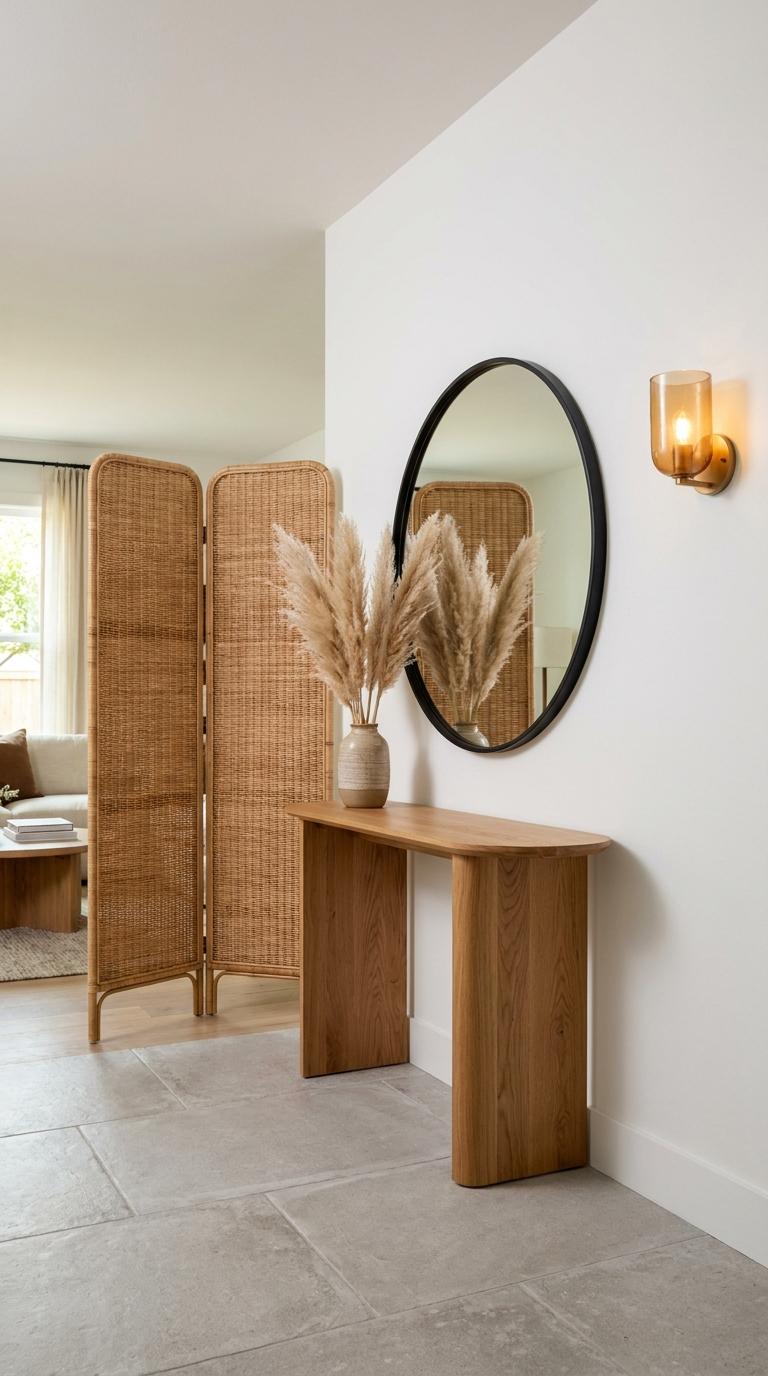
25 Stunning Entryway Decor Ideas for American Homes
Transform your home entrance with these 25 entryway decor ideas. Console tables rattan room dividers mirrors and lighting inspiration for American homes in 2026.
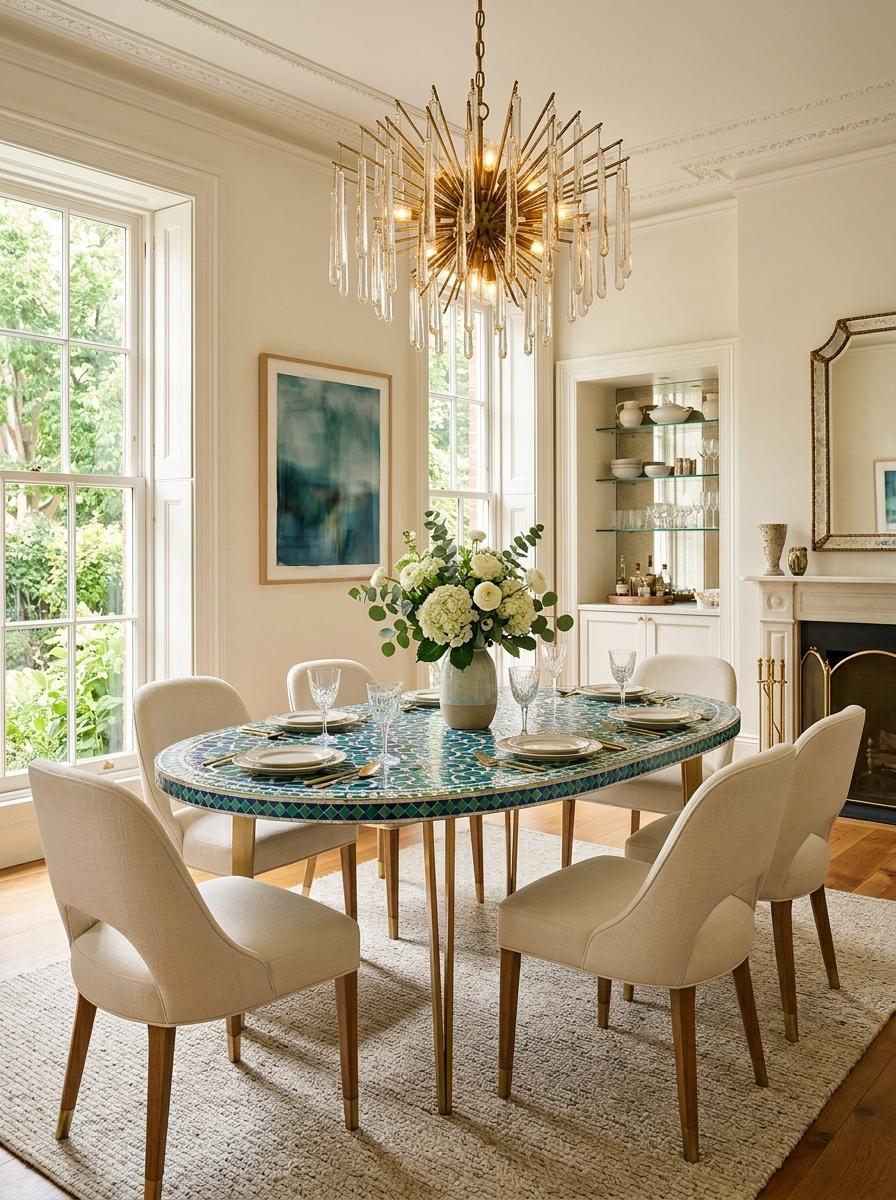
25 Stunning Mosaic Dining Table Ideas for American Homes
Discover 25 breathtaking mosaic dining table ideas including Mediterranean tile patterns, colorful geometric designs and unique mosaic furniture for your American home in 2026.
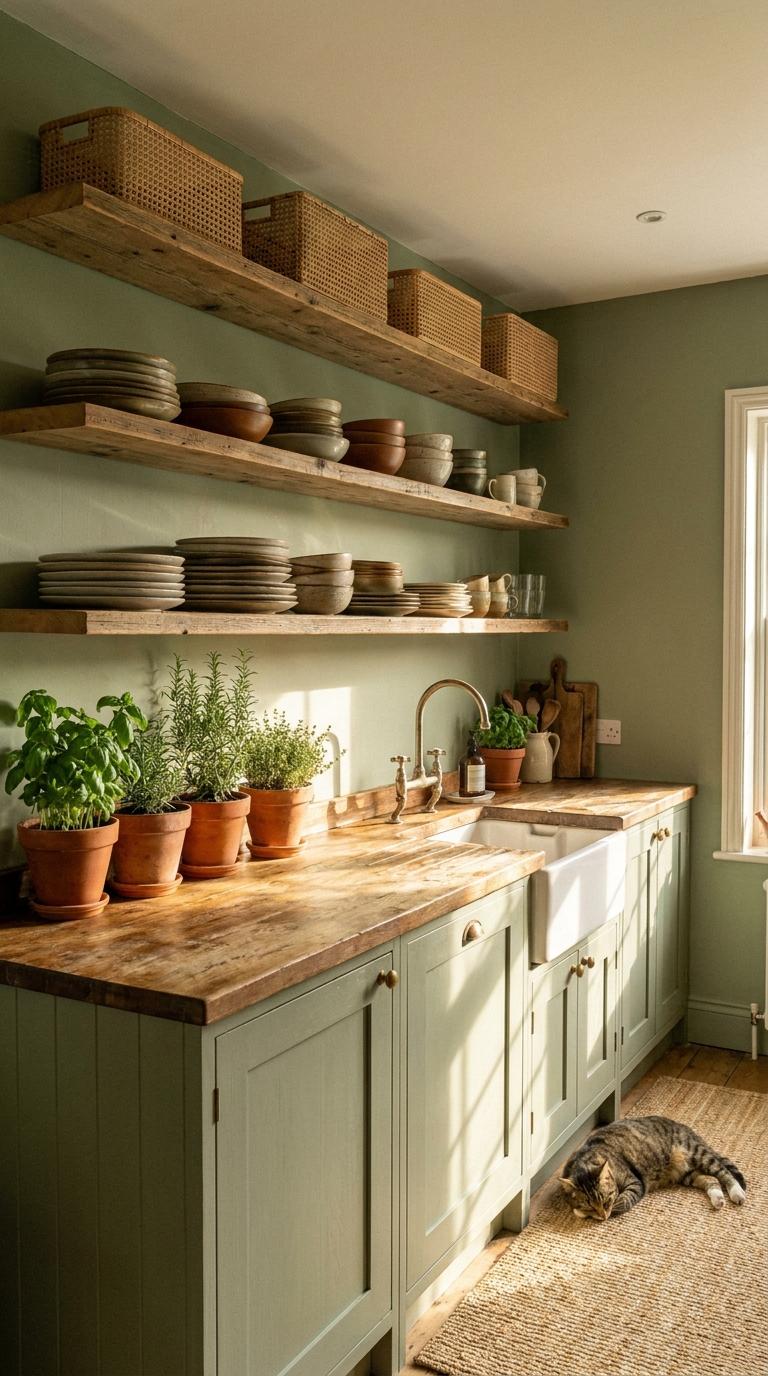
30 Open Shelving Kitchen Ideas
Transform your kitchen with these 30 open shelving ideas. Sage green, farmhouse, modern and budget-friendly floating shelf inspiration for 2026.