This post may contain affiliate links. If you purchase through these links, we may earn a small commission at no extra cost to you. We only recommend products we genuinely love.
Why Live Edge Wood Furniture Has Become the Most Coveted Investment in American Homes
Here is the truth — live edge wood furniture has become the single most coveted home decor investment in American homes in 2026, and once you understand why, you will never look at mass-produced furniture the same way again. There is something deeply captivating about a coffee table made from a natural wood slab where the raw bark edge has been preserved, showing the exact shape the tree grew into over decades or even centuries. Every knot, every grain pattern, every curve of that natural edge tells the story of a living tree — and no two slabs are ever, ever the same. Add the drama of crystal-clear or colored epoxy resin filling natural cracks and voids in the wood, and you have a piece of functional art that rivals anything you would see in a gallery. Remember that viral dried wildflower epoxy table that blew up on Pinterest and TikTok? That is the energy we are talking about. These 25 live edge coffee table ideas will make you fall head over heels in love with handmade furniture.
What Makes Live Edge Coffee Tables So Special?
A live edge coffee table starts with a natural wood slab — a thick cross-section cut from a tree trunk or large branch that preserves the original bark edge and natural contour of the tree. Unlike standard lumber that is milled into perfectly straight boards, live edge slabs celebrate the organic, irregular shape of the living tree. The bark is either preserved and sealed or carefully removed to reveal the beautiful cambium layer beneath, leaving a wavy, sculptural edge that is completely unique to that individual slab. No two live edge pieces are ever identical because no two trees grow the same way — the grain patterns, knots, color variations and edge contours are as individual as fingerprints. Every table carries the signature of the specific tree it came from, the soil it grew in and the decades of weather it endured. The artisan craftsmanship behind each piece adds another layer of uniqueness — the woodworker selects the slab, flattens and sands it by hand, fills any natural voids with resin, applies a finish that brings out the grain, and builds custom legs or a base. The result is a piece of furniture that is genuinely one of a kind in every possible way.
Black Walnut Live Edge Coffee Table Ideas
Black walnut is the king of American live edge furniture — its rich chocolate brown color, dramatic grain patterns and beautiful natural edge make it the most sought-after species for coffee tables. Here are five stunning black walnut designs.
1. Black Walnut with Amber Epoxy Resin Cracks
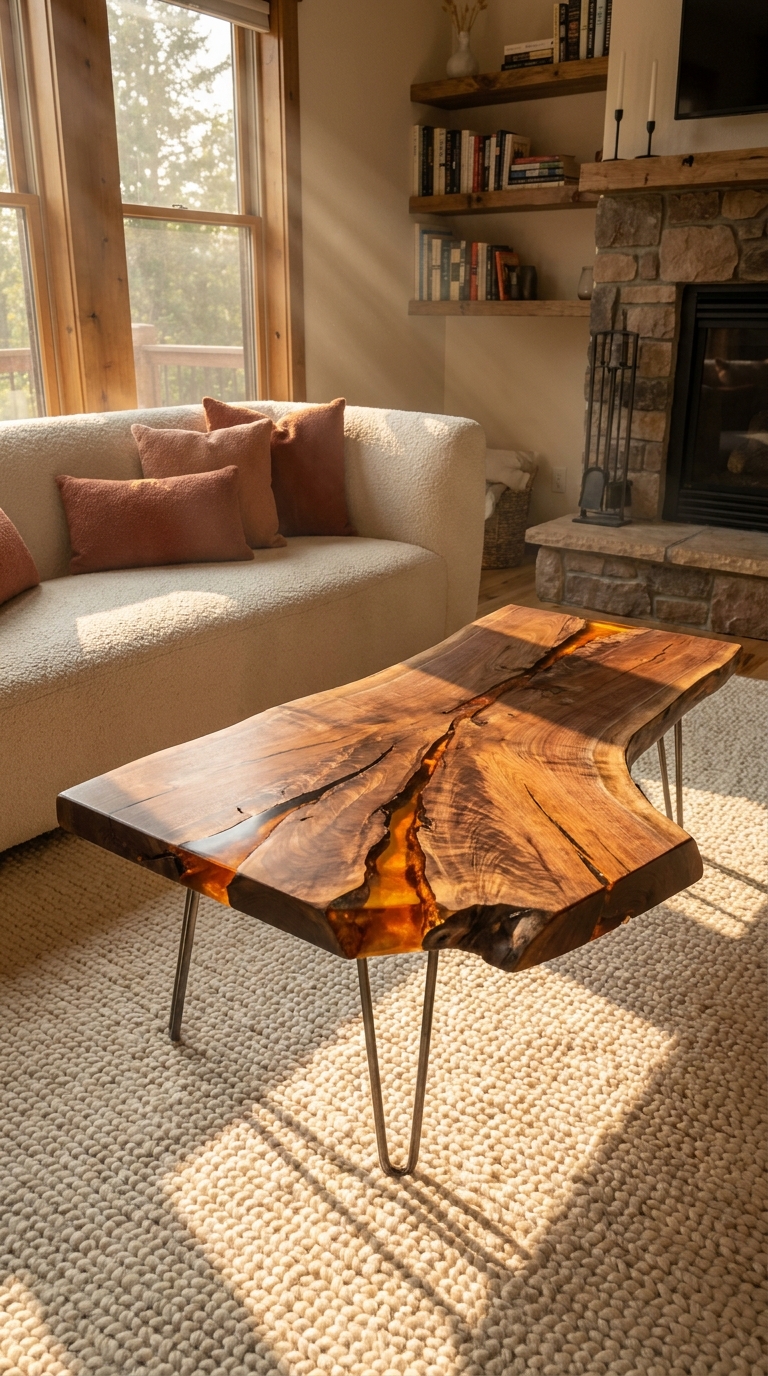
Natural cracks and voids in a black walnut slab filled with warm amber epoxy resin create a coffee table that glows from within like liquid honey trapped in dark wood. The amber resin catches light beautifully and creates a stunning contrast against the dark chocolate tones of the walnut. This design preserves the natural imperfections of the wood rather than hiding them — every crack becomes a feature, every void becomes a window into the tree history. The warm amber tones complement the walnut perfectly and add a luminous quality that makes the table look different at every time of day as the light changes. Pair with steel hairpin legs for a mid-century modern look or thick wooden legs for a more substantial rustic feel.
2. Black Walnut River Table with Blue Resin
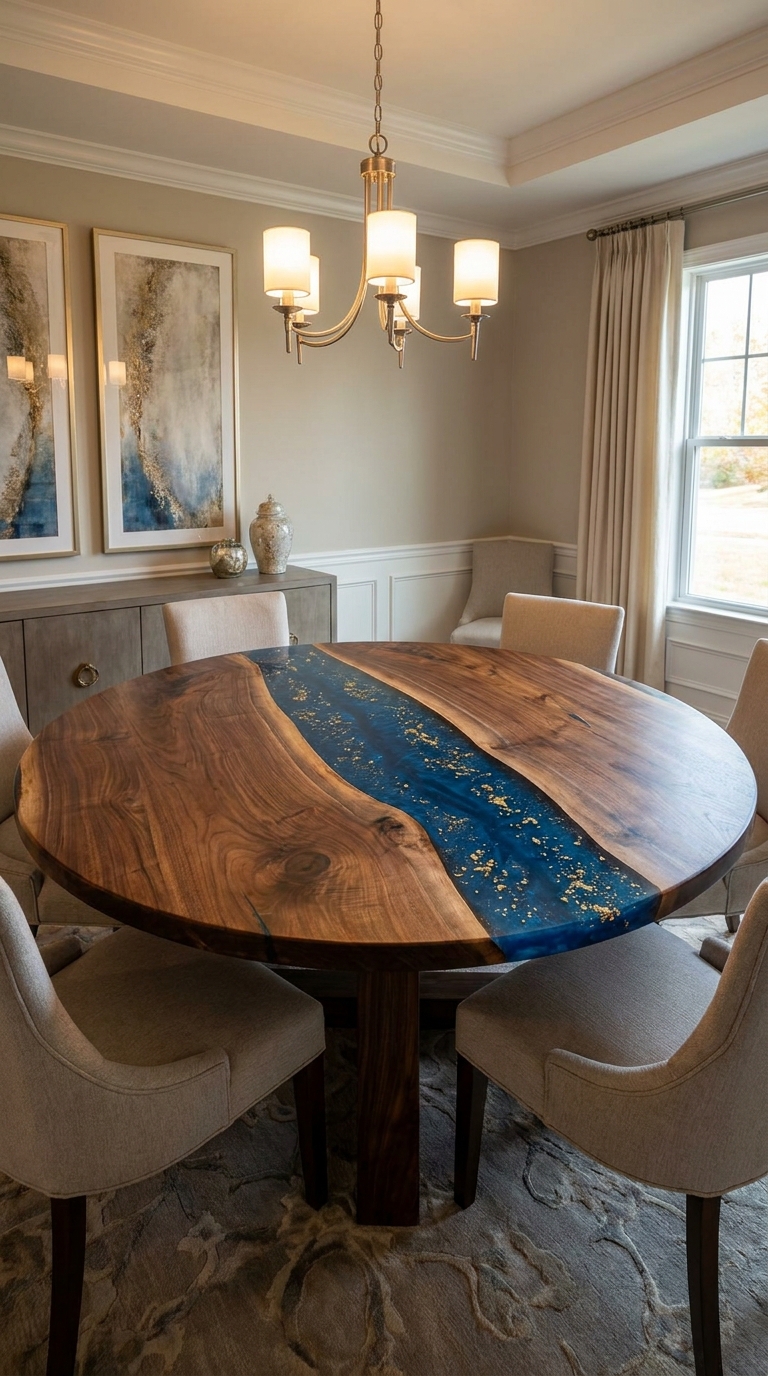
The river table is the most iconic live edge design — two walnut slabs placed parallel with a flowing channel of deep blue epoxy resin between them, creating the illusion of a river cutting through a dark forest canyon. White pigment swirled through the blue resin mimics foam and rapids for incredible realism. The contrast between the near-black walnut and the vivid blue resin is absolutely breathtaking — it is functional art that happens to hold your coffee and books. River tables have been the most requested custom furniture piece on Etsy for three years running because they combine the natural beauty of live edge wood with the mesmerizing depth of colored resin. This table becomes the undisputed centerpiece of any living room.
3. Black Walnut Natural Slab with Steel Legs
Sometimes the most stunning live edge coffee table is the simplest — a single black walnut slab, beautifully finished to bring out the natural grain and color, mounted on sleek industrial steel legs. No resin, no gimmicks, just pure natural wood beauty. The rich chocolate and purple tones of walnut develop an even deeper patina over time as the wood ages gracefully. Flat steel legs in matte black or raw welded steel provide a clean industrial contrast that lets the wood remain the star. This minimalist approach showcases the wood in its most honest form and works in both modern and rustic American living rooms. A quality black walnut slab with steel legs is the quintessential live edge coffee table — timeless, elegant and endlessly beautiful.
4. Black Walnut with Gold Metallic Epoxy
Gold metallic epoxy resin filling natural cracks and voids in dark walnut creates one of the most luxurious live edge designs imaginable. The gold catches light and shimmers against the dark wood like veins of gold ore running through stone. This Japanese-inspired technique called kintsugi celebrates imperfections by highlighting them with precious metal — cracks become features, flaws become beauty marks. The combination of dark walnut and metallic gold feels opulent without being ostentatious. This table works beautifully in living rooms with warm color palettes — cream walls, leather furniture and brass accessories complement the gold-filled walnut perfectly. It is a conversation piece that communicates both sophistication and an appreciation for the beauty of imperfection.
5. Black Walnut Bookmatched Slab Table
A bookmatched walnut coffee table uses two slabs cut consecutively from the same log and opened like the pages of a book, creating a mirror-image grain pattern that is symmetrically stunning. The bookmatched grain creates a natural Rorschach pattern — organic, mesmerizing and completely unique to that specific log. This technique showcases the most dramatic grain figures in the wood — flame patterns, crotch figures and cathedral arches become symmetrical works of art. The two live edges run along the outside of the table, preserving the natural tree shape on both sides. Bookmatched walnut tables are prized by collectors and woodworking enthusiasts as the highest expression of the live edge craft because they require finding the perfect log and cutting it with precision.
Live Edge Oak Coffee Table Ideas
White oak and red oak are beautiful alternatives to walnut for live edge coffee tables — lighter in color, equally dramatic in grain and often more affordable. Oak live edge tables bring warmth and natural beauty to American homes.
6. White Oak Natural Slab with Clean Edge
White oak is the darling of modern interior design — its light honey color and distinctive ray fleck grain pattern create a live edge coffee table that feels bright, contemporary and effortlessly stylish. A natural white oak slab with the bark carefully removed to reveal the smooth cambium edge, finished in a matte clear coat and mounted on slim black steel legs, is modern Scandinavian perfection. The lighter color makes white oak ideal for rooms where walnut would feel too dark or heavy. White oak is also incredibly durable — it has been used in barrel-making and boat-building for centuries because of its resistance to moisture and wear. This is a table that will look beautiful for generations.
7. Red Oak Rustic Slab with Bark Preserved
A red oak slab with the natural bark carefully preserved and sealed creates the most rustic and authentic live edge experience. The bark adds incredible texture and a raw, forest-fresh quality that stripped edges cannot replicate. Red oak has a warm pinkish-brown color and bold grain pattern that reads beautifully in farmhouse and rustic American living rooms. Bark preservation requires careful sealing with epoxy or stabilizer to prevent it from peeling over time — a skilled woodworker ensures the bark stays permanently attached while remaining safe to touch. Pair with chunky natural wood legs or a raw steel base for a table that looks like it was hewn straight from the forest floor.
8. Oak Slab with Butterfly Keys
Butterfly keys — also called bow ties — are decorative wooden inlays placed across natural cracks in a slab to prevent them from spreading further. When crafted from a contrasting wood like walnut butterfly keys in white oak, they become striking design features that celebrate the wood natural imperfections while adding structural beauty. This traditional woodworking technique has been used for centuries and carries a sense of craftsmanship and heritage that modern furniture rarely achieves. Each butterfly key is hand-cut and fitted by the woodworker, making every placement unique. This design appeals to woodworking enthusiasts and anyone who appreciates visible joinery as a form of art.
9. White Oak Waterfall Edge Coffee Table
A waterfall edge design takes a live edge oak slab and wraps the wood continuously from the tabletop down to the floor on one or both sides, creating a seamless cascade of wood grain. The live edge runs along the top and continues down the waterfall side, maintaining the natural tree shape throughout. This design is architecturally dramatic and incredibly modern — the continuous grain flowing from horizontal to vertical is mesmerizing. White oak is ideal for waterfall designs because the ray fleck grain pattern creates a beautiful visual flow around the corner. This table works best in contemporary and modern living rooms where its sculptural quality can be appreciated as a design statement.
10. Round Oak Cookie Slab Table
A round cross-section cut from a large oak tree trunk — called a cookie slab — creates a uniquely round live edge coffee table where the natural bark edge encircles the entire piece. The visible growth rings on the surface tell the story of the tree age and history — you can literally count the years of the tree life on your coffee table. Cookie slabs develop natural checks and cracks as they dry, which can be filled with clear or colored epoxy for added visual interest. Mount on a simple pedestal base or three hairpin legs for stability. This is the most organic and nature-connected live edge design — it is literally a slice of a living tree preserved as furniture, connecting your American living room directly to the forest.
Live Edge Tables with Epoxy Resin
Epoxy resin transforms live edge wood from beautiful to absolutely extraordinary. The combination of natural wood with colored, metallic or crystal-clear resin creates furniture that is genuinely wearable art for your living room.
11. Ocean Blue River Coffee Table
The ocean blue river table captures the essence of a tropical coastline — deep blue resin that transitions from dark ocean depths to lighter turquoise shallows, with white pigment swirled through to create realistic foam and wave effects. The natural wood edges on either side represent the rocky coastline, with their organic curves and bark texture adding to the coastal illusion. Some artisans add real sand or tiny shells at the bottom of the resin pour for extra coastal authenticity. This table brings the calming energy of the ocean into your living room and works beautifully in coastal American homes from Maine to California. Under warm lighting, the blue resin develops incredible depth that draws the eye in endlessly.
12. Emerald Green Resin Fill Table
Emerald green epoxy resin filling natural voids, cracks and knot holes in a live edge slab creates a table that looks like precious gemstones are embedded in the wood. The deep green has an incredible jewel-like quality, especially when the resin is poured with slight metallic shimmer added. Against dark walnut, the emerald pops dramatically. Against lighter oak, it creates a more subtle, nature-inspired contrast. The green fills transform every natural imperfection in the wood into a glowing emerald feature — cracks become rivers of green, knot holes become emerald pools, bark inclusions become jeweled accents. This design is perfect for living rooms with nature-inspired or jewel-toned color schemes.
13. Galaxy Purple Epoxy Coffee Table
Deep violet and amethyst epoxy resin swirled with silver and white metallic flakes between two live edge slabs creates a coffee table that looks like a window into the cosmos. The galaxy effect has extraordinary depth — layers of purple shift from dark at the edges to bright violet in the center with sparkling star-like metallic flakes scattered throughout. The dark wood edges frame the galaxy river like the edge of space. Some artisans add glow-in-the-dark pigments that make the galaxy come alive when the lights go out — an absolutely mesmerizing effect for movie nights. This table is pure magic in dimly lit living rooms where ambient lighting catches the metallic flakes and creates a shimmering effect.
14. Rose Gold Metallic Resin Table
Rose gold metallic epoxy resin creates a warm, feminine, luxurious effect that differs completely from the typical blue and green resin tables dominating the market. The rosy copper metallic pigment swirls through clear resin in organic patterns that catch light beautifully and shift color depending on the viewing angle. Paired with a light maple or ash live edge slab, the rose gold creates a soft, glamorous table. Paired with dark walnut, it creates a rich, sophisticated contrast. Rose gold resin is still relatively uncommon in the live edge world, making these tables especially unique and conversation-starting. This design appeals to homeowners who want an epoxy resin table with warmer, more romantic energy than the typical cool-toned options.
15. Dried Wildflower Epoxy Round Table
Dried wildflowers, pressed ferns and botanical specimens preserved forever under crystal-clear epoxy resin on a live edge round slab is the most romantic and Instagram-worthy coffee table design of 2026. The botanical elements are carefully arranged on the wood surface and sealed under a perfectly smooth, glass-clear resin pour that preserves every tiny petal, leaf and stem in stunning detail. The round live edge cookie slab provides a natural frame for the botanical display. This design went viral on social media because the combination of natural wood, preserved flowers and glossy resin is simply breathtaking in photographs and even more stunning in person. It is the perfect table for cottagecore, bohemian and nature-loving American homes.
Rustic Live Edge Coffee Table Ideas
Rustic live edge coffee tables embrace the raw, unrefined beauty of natural wood with minimal processing and maximum character. These designs celebrate knots, cracks, bark and imperfections as features rather than flaws.
16. Reclaimed Barn Beam Coffee Table
A thick beam salvaged from a century-old American barn, split to reveal the live edge interior and mounted on simple iron legs, creates a coffee table with more history and character than any new furniture can match. The aged wood carries decades of patina — weathered gray surfaces, original nail holes, saw marks and the deep color variations that only come from a hundred years of exposure. Barn beam tables are the ultimate in sustainable furniture because they give new life to materials that would otherwise be lost to demolition. Each beam carries the history of the farm, the family and the era it was built in. These tables are conversation starters that connect your modern American living room to the agricultural heritage of the country.
17. Natural Tree Stump Coffee Table
A large tree stump sanded smooth on top, bark preserved on the sides and sealed with a durable clear coat is the most raw and organic coffee table you can own. The irregular shape, visible growth rings and natural bark create a piece that is literally a fragment of a living tree preserved as furniture. Look for stumps from recently felled trees — local tree service companies, logging operations and storm cleanup crews are excellent sources. Choose a stump at least 16 to 18 inches tall for proper coffee table height. The top is sanded smooth for practical use while the sides maintain their full natural character. Every stump table is one of a kind by definition and costs virtually nothing if you source the wood yourself.
18. Driftwood Live Edge Slab Table
A slab of naturally weathered driftwood — bleached pale by sun and salt, smoothed by water and sand — creates a coffee table with a coastal, sun-washed quality that no finish or stain can replicate. Driftwood has a beautiful silvery-gray patina and organic curves that are shaped entirely by natural forces. The grain is often compressed and hardened by water exposure, creating interesting textural patterns. Mount on simple iron hairpin legs or a driftwood base for a table that brings coastal energy to any American living room. Source driftwood responsibly from beaches, rivers and lakes — large pieces suitable for coffee tables are rare finds that make the resulting furniture even more special and meaningful.
19. Rough Hewn Hand-Adzed Table
A hand-adzed live edge slab retains visible tool marks from traditional hand tools — adze marks, drawknife textures and chisel grooves — that celebrate the hand craftsmanship of pre-industrial woodworking. The surface is not perfectly smooth but intentionally textured, showing the marks of the human hands that shaped it. This creates a coffee table with an ancient, primitive quality that connects modern American homes to centuries of woodworking tradition. The live edge is left completely natural with bark intact. Pair with a simple trestle base or turned wooden legs for an authentic rustic look. This design appeals to woodworking purists and anyone who values the visible evidence of handmade craftsmanship over machine-made perfection.
20. Split Log Coffee Table
A large log split in half lengthwise and placed flat-side down creates a coffee table with a naturally rounded top surface and bark on all sides. The curved top is unconventional but surprisingly practical — it provides a natural cradle for books and objects. The bark-covered sides and round shape make it look like a piece of the forest was transported directly into your living room. Choose a log from a hardwood species with attractive bark — birch, cherry and hickory all have beautiful bark textures. The split surface reveals the heartwood grain in full glory. Mount on short hidden legs or casters for stability and mobility. This is the most dramatic and conversation-starting rustic live edge design — raw nature at its most unapologetic.
How to Choose a Live Edge Coffee Table for Your American Home
Choosing the perfect live edge coffee table requires balancing aesthetics with practical considerations. Start with room size — measure your seating area and choose a table that is roughly two-thirds the length of your sofa, sitting about 18 inches away from the sofa edge. For small living rooms, a round cookie slab or compact rectangular slab works best. For larger spaces, a full river table or oversized slab creates a dramatic centerpiece. Consider wood species — black walnut is the most prized for its rich color and dramatic grain, white oak is perfect for lighter modern spaces, and cherry offers a warm reddish tone that develops beautiful patina over time. Leg style dramatically affects the overall look — steel hairpin legs feel mid-century modern, thick wooden legs feel rustic farmhouse, and slim flat steel feels contemporary industrial. Decide whether you want epoxy resin features or a pure natural look — resin adds color and drama while natural slabs let the wood speak entirely for itself. Budget-wise, live edge tables range from a few hundred dollars for a simple slab with basic legs to several thousand for a custom river table with exotic wood. Set your budget first, then work with an artisan to find the perfect piece within your range.
Love These Ideas?
Get more beautiful home decor inspiration delivered to your inbox every week. Join 10,000+ decor enthusiasts!
No spam, unsubscribe anytime.
How Much Does a Live Edge Coffee Table Cost?
Live edge coffee tables vary widely in price depending on the wood species, size, complexity and whether epoxy resin is involved. Here is a realistic cost breakdown for the American market:
| Type | Price Range |
|---|---|
| Small Live Edge Side Table | $200 - $500 |
| Medium Coffee Table (Natural Slab) | $500 - $1,500 |
| Large Coffee Table with Epoxy Resin | $1,000 - $3,000 |
| Custom Commissioned Piece | $2,000 - $6,000 |
Black walnut commands the highest prices due to its beauty and demand. White oak and ash are more affordable alternatives that still produce stunning live edge tables. For the best selection of handmade live edge coffee tables, Etsy is the top marketplace — thousands of woodworkers offer custom pieces in every wood species and style [AFFILIATE LINK]. Local woodworkers and furniture boutiques are also excellent sources for custom commissions. Lumber yards and sawmills sell raw slabs if you want to DIY or commission a local maker.
How to Style a Live Edge Coffee Table
A live edge coffee table is already a powerful design statement, so styling it requires restraint and intention. Tip one: keep surrounding decor simple — a live edge table has incredible visual texture and character, so the rest of the room should provide a calm backdrop rather than competing for attention. Neutral walls, simple seating and minimal accessories let the table shine. Tip two: use a tray for organization — a simple round or rectangular tray corrals remotes, candles and small items into a tidy vignette that keeps the beautiful wood surface visible. Tip three: mix textures thoughtfully — pair the natural wood with complementary textures like linen, leather, wool and ceramic rather than glossy or synthetic materials that clash with the organic quality. Tip four: add one living element — a small potted plant, a vase of fresh flowers or a sprig of eucalyptus adds life and freshness that connects the wood to its natural origins. Tip five: let the table be the hero — resist the urge to cover it with too many objects. The natural edge, the grain pattern and the wood color are the decoration. Show them off with pride and let guests see and touch the beautiful surface.
More Live Edge Coffee Table Ideas to Inspire You
Still searching for the perfect live edge design? These final five ideas cover additional wood species and creative approaches that expand the possibilities of live edge furniture.
21. Cherry Wood Live Edge Table
Cherry wood live edge coffee tables have a warm reddish-brown tone that deepens dramatically over time — new cherry starts as a light pinkish-salmon color and ages into a rich, deep reddish-brown that rivals mahogany in beauty. This natural color evolution means your cherry coffee table literally becomes more beautiful with every passing year. The grain is fine and even with occasional figure and flame patterns. Cherry is softer than walnut or oak, giving it a smooth, silky feel when finished. The live edge on cherry is typically delicate and graceful with gentle curves. This table is perfect for traditional and transitional American living rooms where warmth and elegance are valued.
22. Maple Burl Coffee Table
A maple burl slab is one of the most visually dramatic wood specimens in existence — the swirling, knotted, eye-like grain patterns created by a tree growth abnormality produce a surface that looks almost otherworldly. Maple burl coffee tables are prized by collectors because large burl slabs are rare and incredibly beautiful. The light cream color of maple combined with the wild burl figure creates a table surface that looks like abstract art. Finish with a high-gloss clear coat to maximize the three-dimensional quality of the burl figure, or use a matte finish for a more understated presentation. Mount on a simple dark steel base to let the extraordinary wood grain take center stage. These tables are investment pieces that genuinely appreciate in value.
23. Live Edge Table with Hairpin Legs
Hairpin legs are the most popular leg choice for live edge coffee tables because they add mid-century modern style without distracting from the natural wood. The slim, angular steel rods lift the slab just enough to create visual lightness while providing sturdy support. Available in matte black, raw steel, brass and even copper finishes, hairpin legs work with every wood species and every interior style. They are also the most affordable leg option, making them ideal for budget-conscious builds and DIY projects. A beautiful live edge slab with four hairpin legs is the fastest path to a stunning coffee table — no complex joinery, no heavy construction, just slab, legs and screws. It is clean, modern and endlessly appealing.
24. Reclaimed Barn Wood Coffee Table
Reclaimed barn wood coffee tables carry generations of American agricultural history in every weathered grain and rusty nail hole. The wood has been exposed to decades of sun, rain, heat and cold, creating a patina and character that new wood cannot replicate no matter how skillfully it is distressed. The live edge on reclaimed barn wood is often rough and irregular — split, cracked and beautifully imperfect. These tables are the ultimate in sustainable furniture because they rescue materials from demolition and give them a new life in modern homes. Source reclaimed barn wood from salvage companies, architectural reclamation yards and directly from farmers demolishing old structures. Each piece carries a story that adds genuine meaning to your living room.
25. Cedar Live Edge Outdoor Coffee Table
Western red cedar is naturally resistant to moisture, rot and insects, making it the ideal species for an outdoor live edge coffee table that can withstand American weather year-round. The warm reddish-brown color and straight grain of cedar are naturally beautiful, and the aromatic scent of cedar adds a sensory element that other woods lack. A cedar live edge slab sealed with an outdoor-rated finish and mounted on powder-coated steel legs creates a patio coffee table with serious style and genuine durability. Cedar weathers gracefully to a silvery-gray if left unsealed, which many homeowners prefer for the natural aged look. This table bridges the gap between outdoor furniture and artisan live edge design — bringing natural wood beauty to your American deck, patio or backyard.