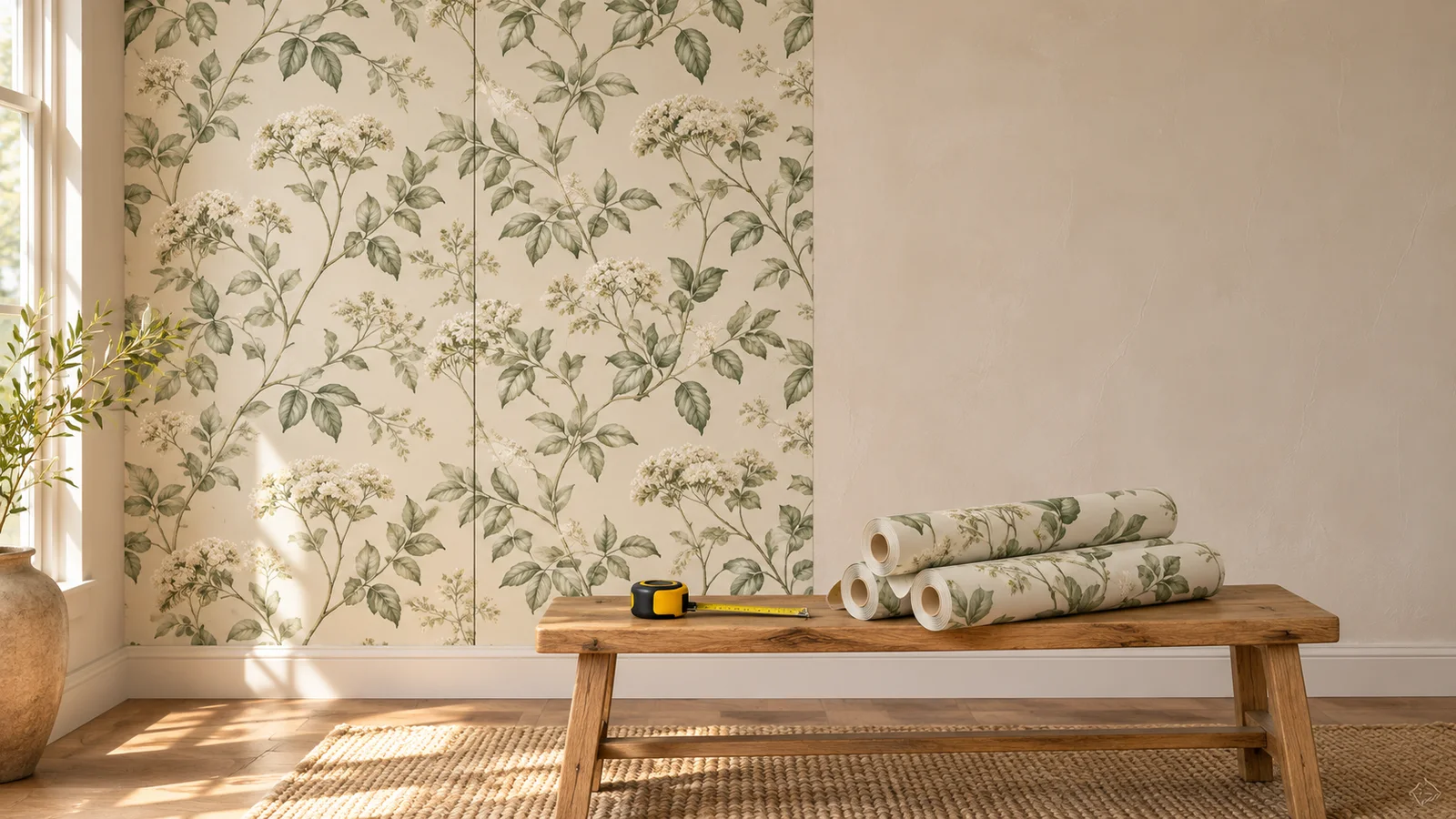
A 12 × 10 ft room with 8 ft walls needs 28 drops when using 20.5-inch-wide wallpaper. With 4 inches of trim and an 18-inch straight repeat, a 33 ft double roll yields 3 drops: 10 rolls minimum, 11 with a 10% extra buffer, or 12 including one spare.
Reviewed by Live Decor Well · Last reviewed . Calculation and source review: November 21, 2026. Estimates include per-drop trim; room tables use the calculator engine. Images are generated editorial illustrations, not installation evidence.
Inside this story
Manufacturer and retailer links help verify specifications and prices. This guide is based on research, not hands-on product testing.
Start with the wall and the roll label
How much wallpaper you need depends on the dimensions of both the room and the actual product. Measure each wall independently, note the tallest height, then copy the roll width, length, repeat and match from the label. Our wallpaper calculator keeps those assumptions visible beside the purchase estimate.
The opening example counts all four walls separately and does not deduct ordinary doors or windows from its drop count. Those openings may reduce the area to cover, but short pieces above or below them still need to come from somewhere. A conservative estimate keeps full strips until a cutting plan shows which can be saved.
For uneven ceilings, measure in several places and use the highest point. If you are papering only above a dado rail, measure that section rather than the full room height. Treat separate walls as separate widths: a narrow offcut from one wall is not automatically wide enough to finish another.
The quick method: wall area
Add the wall widths, multiply by height, then subtract the measured area of openings. Multiply by an allowance, divide by the gross area of a physical roll and round up. This gives a quick budget comparison, not a cutting plan: the square footage does not show which offcuts are usable.
For a 12 × 10 ft room, total wall length is 44 ft and gross wall area is 352 sq ft. Using illustrative opening sizes of 21 sq ft for a door and 15 sq ft for a window gives 316 sq ft. Your actual openings may be larger or smaller.
With a rough 15% allowance, 316 × 1.15 = 363.4 sq ft. A 20.5 in × 33 ft roll contains 56.375 sq ft, so 363.4 ÷ 56.375 = 6.45, rounded up to 7 rolls. That number cannot establish whether the roll produces enough full-height drops. In this example, the drop method below needs more.
Retail estimating guides such as Sherwin-Williams’ wallpaper quantity guidance also consider usable yield and pattern repeat. Avoid treating one fixed coverage figure as correct for every ceiling height and product. The calculator shows gross-area comparison separately from its headline strip-based purchase.
The accurate planning method: count drops
Wallpaper is normally hung in vertical strips called drops. For straight match, round height plus trim up to whole pattern repeats. Divide the roll length by that allowance and round down. Count each wall’s required strips separately, then divide their total by drops per roll and round the purchase up.
In the 12 × 10 ft room, each 12 ft wall needs ceiling(144 ÷ 20.5) = 8 drops, and each 10 ft wall needs ceiling(120 ÷ 20.5) = 6. The total is 8 + 6 + 8 + 6 = 28. Dividing the entire perimeter at once would conceal the partial-width strips at wall ends.
At 8 ft height, add 4 in trim: 96 + 4 = 100 in. With an 18 in straight repeat, round that up to six repeats, or 108 in. A 396 in roll yields floor(396 ÷ 108) = 3 drops, so ceiling(28 ÷ 3) = 10 rolls before extra contingency.
A 10% extra buffer gives ceiling(28 × 1.10) = 31 whole drops. That requires ceiling(31 ÷ 3) = 11 rolls; an unopened spare makes 12. Repeat rounding is already included, so the extra buffer is for mistakes and uncertainty rather than another hidden pattern percentage.
| Input or result | Plain / random | 21 in straight repeat |
|---|---|---|
| Height + trim | 96 + 4 = 100 in | 96 + 4 = 100 in |
| Cutting allowance | 100 in | 105 in |
| 33 ft roll yield | 3 drops | 3 drops |
| Drops across 40 ft | 24 | 24 |
| Minimum physical double rolls | 8 | 8 |
Why plain wallpaper does not always save a roll
Plain wallpaper avoids pattern matching, but it still needs trimming allowance. A 33 ft roll is 396 inches long, while four 100-inch drops need 400 inches. That means only three full drops fit in this example. Removing pattern rounding alone therefore does not reduce the number of rolls required.
The York installation guide allows approximately 4 extra inches per strip for trimming. Follow your chosen product’s instructions. Cutting plain drops to the bare wall height can produce a theoretical lower roll count, but that is a different assumption and leaves no trim for an uneven ceiling or floor.
An offcut cannot be added invisibly to the top of a short strip to make it longer. If an installer can use remnants above a doorway, that may improve the overall cutting plan, but it does not change the length of a full-height drop.
Rolls for common room sizes
Use this table as a starting point, not an order guarantee. It assumes four separate walls, 8 ft height, 4 in trim, an 18 in straight repeat and 20.5 in × 33 ft rolls. Ordinary doors and windows are retained in the strip count; the spare is additional.
| Room | Drops | Minimum rolls | With 10% buffer | Plain + 10% |
|---|---|---|---|---|
| 10 × 10 ft | 24 | 8 | 9 | 9 |
| 12 × 10 ft | 28 | 10 | 11 | 11 |
| 12 × 12 ft | 32 | 11 | 12 | 12 |
| 14 × 12 ft | 34 | 12 | 13 | 13 |
| 16 × 14 ft | 38 | 13 | 14 | 14 |
Single vs double rolls: read the label
A US double roll commonly contains twice the length of a single roll at the same width. European sizes differ again, and product ranges do not all use the same dimensions. Before comparing prices, confirm the actual length delivered and whether the quoted price covers that complete physical roll.
If a listing quotes $30 per single roll but ships doubles, the physical double roll may cost $60. Multiplying a double-roll quantity by the single-roll quote would halve the budget incorrectly. Custom and extra-wide products also need their own dimensions entered into the calculator.
| Type | Width | Length | Gross area |
|---|---|---|---|
| US double | 20.5 in / 52.1 cm | 33.00 ft / 10.058 m | 56.37 sq ft / 5.24 m² |
| US single | 20.5 in / 52.1 cm | 16.50 ft / 5.029 m | 28.19 sq ft / 2.62 m² |
| European standard | 20.9 in / 53.0 cm | 32.97 ft / 10.050 m | 57.33 sq ft / 5.33 m² |
| European wide | 27.6 in / 70.0 cm | 32.97 ft / 10.050 m | 75.72 sq ft / 7.04 m² |
| Extra-wide | 41.7 in / 106.0 cm | 32.97 ft / 10.050 m | 114.67 sq ft / 10.65 m² |
How much extra should I buy?
Keep the cutting allowance, extra buffer and spare separate. The cutting math accounts for repeat alignment and leftover roll length. The editable buffer covers uncertainty such as mistakes or awkward layout. A spare from the same batch is an additional purchase for damage, repairs or unexpected work, not guaranteed usable offcut recovery.
The calculator starts at 10% extra buffer. A complicated pattern or difficult room may justify more, but a fixed percentage cannot replace the product’s installation instructions. Check the order with your installer, especially for an expensive paper, a centred feature motif or multiple ceiling heights.
Inspect the batch or dye-lot numbers before opening rolls. A later order from another production run may differ in colour. Keep the label and store any spare as directed so it remains useful for repairs.
How many rolls for one accent wall?
Measure the accent wall alone and count its full drops. A 12 ft wide, 8 ft high wall needs 8 drops at 20.5 in width. With 4 in trim and a 21 in straight repeat, a 33 ft roll provides 3 drops, so the minimum purchase is 3 rolls.
A 10% buffer raises the target to 9 drops, which still fits those 3 rolls; one spare makes 4. Try the accent-wall mode in the wallpaper rolls calculator instead of dividing a whole-room estimate. For adjacent painted surfaces, use the paint calculator.
If you are unsure why the drop length changes, read wallpaper pattern repeat explained. It distinguishes straight match, half-drop allowances and free match, with examples showing when the rounded purchase actually increases.
Frequently Asked Questions
You Might Also Love
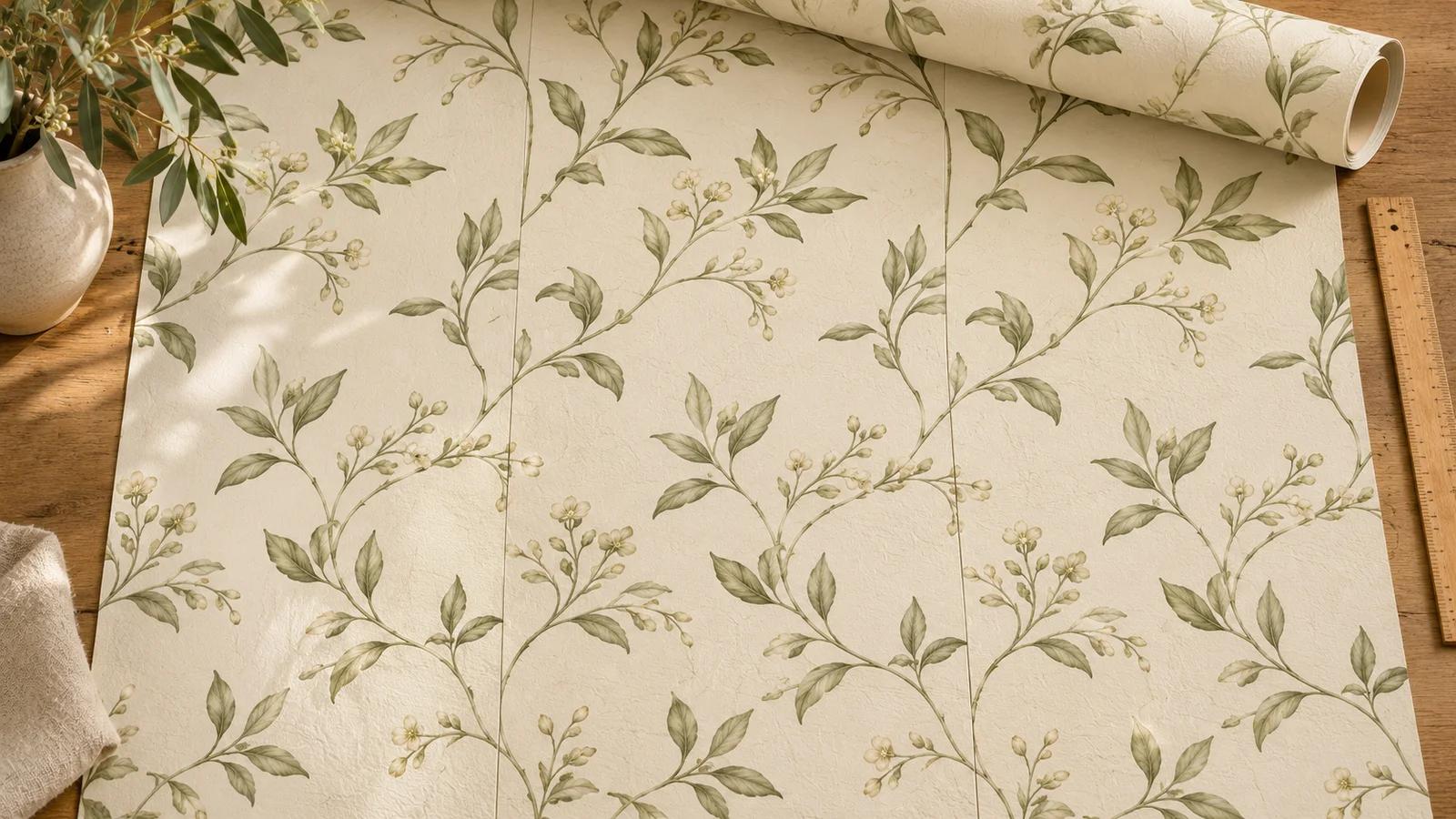
Wallpaper Pattern Repeat Explained
A pattern repeat is the distance down the roll before the same design appears again. It affects the cutting allowance, but does not always add a whole roll to the order. Compare usable drops per roll with identical height and trim assumptions before deciding how much extra the pattern costs.
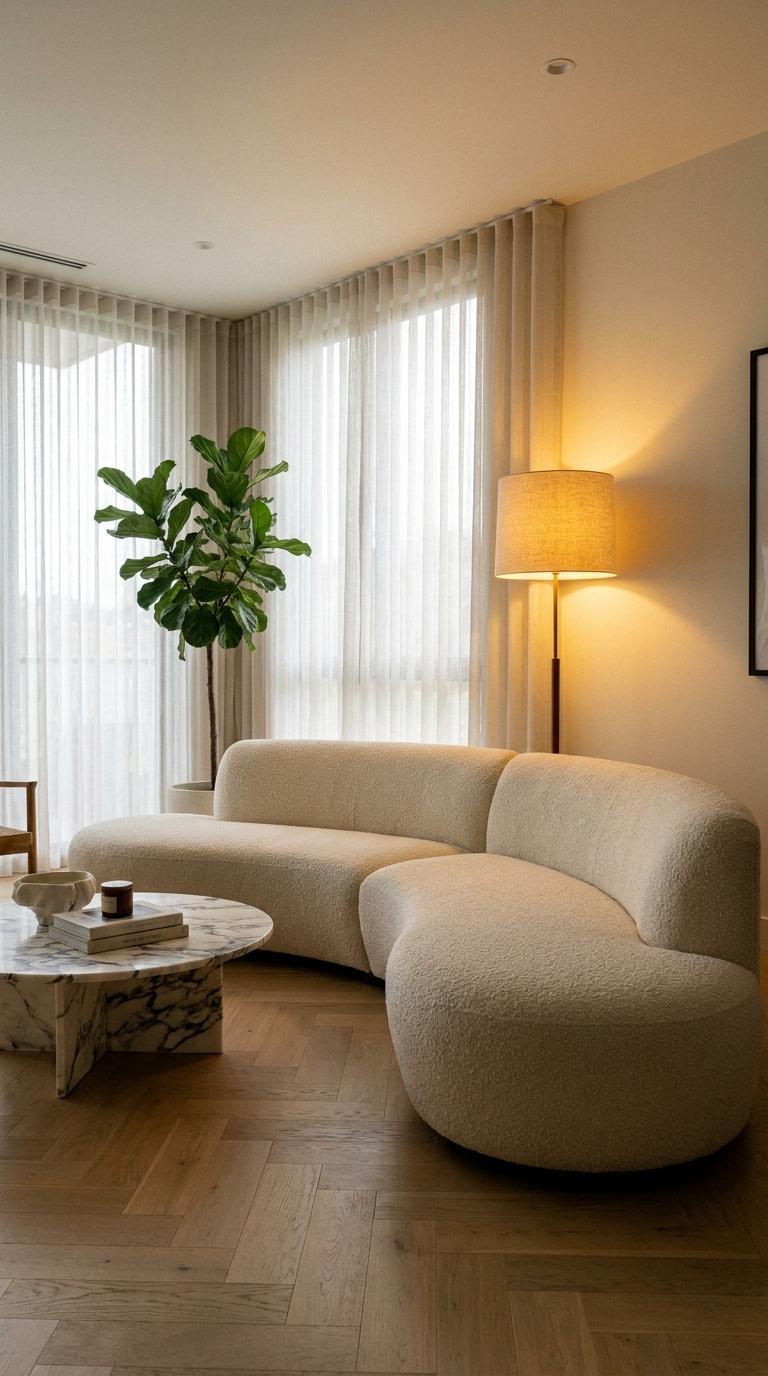
30 Modern Living Room Ideas
Discover 30 stunning modern living room ideas with curved sofas, statement lighting and contemporary decor. Transform your space with these 2026 interior design trends.
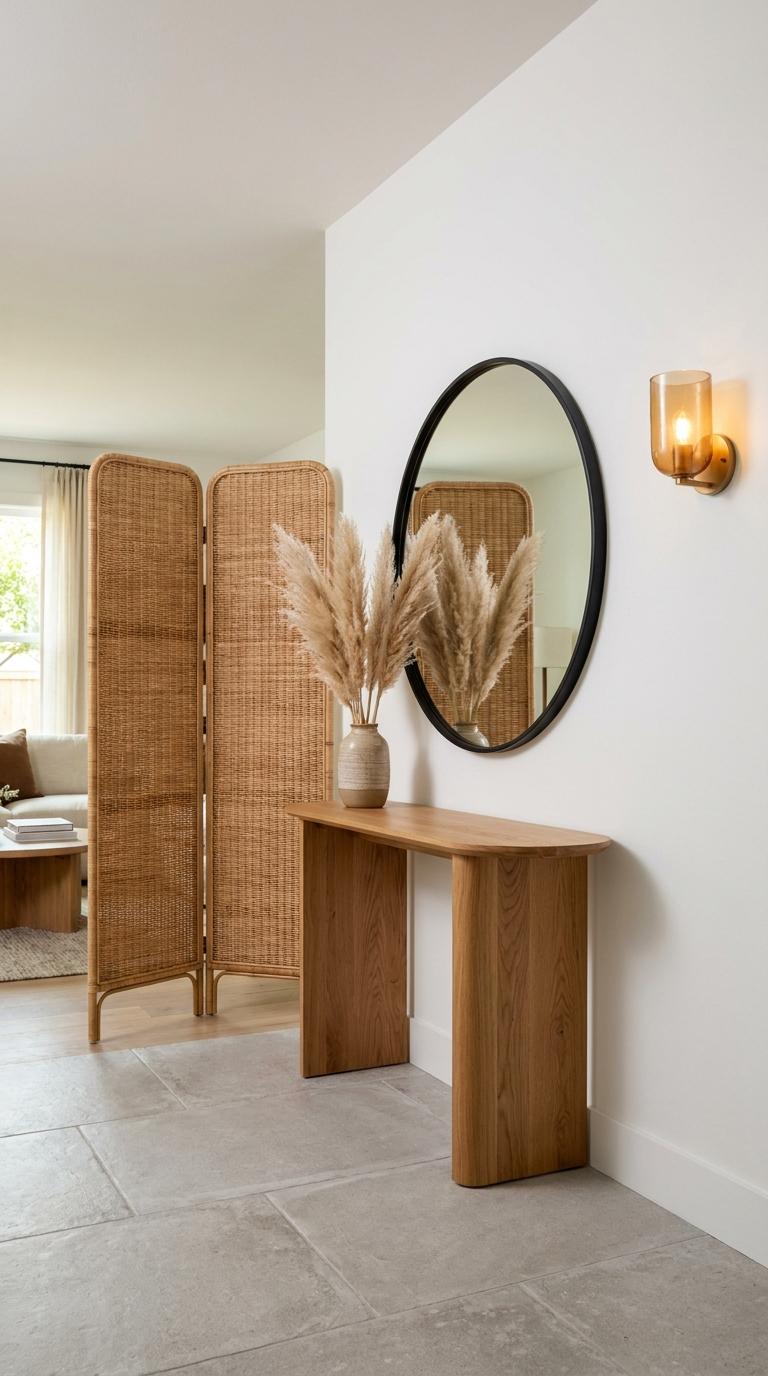
25 Stunning Entryway Decor Ideas for American Homes
Transform your home entrance with these 25 entryway decor ideas. Console tables rattan room dividers mirrors and lighting inspiration for American homes in 2026.